

In this guide, we look at preparing for the interview. We’ll cover talking about your experience, structuring your answers, and give example questions.
As with all the process so far, we cannot emphasise enough the importance of preparation.
The interview panel is usually made up of two members of staff, and at least one will be operational. The interview will last approximately 50 minutes, including a short presentation. The main aim of the interview is to gather examples of when and how you have used skills that are important for potential firefighters.
The areas that will be assessed are drawn from areas reflected in the National Fire Chiefs’ Council (NFCC) Leadership Framework under ‘Leading Yourself’ and linked to the Code of Ethics.
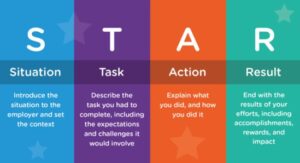
When structuring your answer, try to use the following STAR approach:
- Situation – When, where, with whom? Set the context of your example.
- Task – Describe the situation, task or problem you were faced with.
- Action – What action did you take? It is important you give examples of your individual actions – you will get no credit for a group decision.
- Result – What results did you achieve? What conclusions did you reach? What did you learn from the experience?
After you have given your example, your interviewers may ask follow up questions to clarify their understanding. They may also prompt you during the interview – this is to gain a greater understanding and clarity about the area being questioned, and to also support you in giving as full an answer as you can.
Choosing an example
Your interviewers are primarily interested in your personal experiences. When you are choosing an example, you are encouraged to think about situations at work, college, in your home life, in your hobbies, or in any other clubs or organisations you may be a member of.
Your interviewers will be looking for examples of what you have said, done or decided. Your interviewers will not be able to give you credit for hypothetical examples of what you would or might do in a particular situation.
It is important that you choose an example that is clear in your memory, so that you can confidently talk your interviewers through what you did and why.
During your interview, it is preferable not to use the same example more than once. While you are practising, you are encouraged to think of several examples. To get used to talking about your experience, you should practice answering these questions aloud, keeping in mind the STAR approach and the need to give specific examples about what you have done.
NFCC Leadership Framework
Familiarise yourself with the four key areas in the NFCC Leadership Framework and the behaviours expected under the ‘Leading Yourself’ criteria relating to Personal Impact, Outstanding Leadership, Service Delivery and Organisational Effectiveness. In the final guide we’ll look at some example questions aligned with these.
This is the end of your fifth recruitment guide, please move on to the sixth and final guide when you are ready.
Please note that this guide was provided during the 2024/2025 recruitment process. This may not be exactly the same going forward, but it gives you an idea of what a future process may look like.