

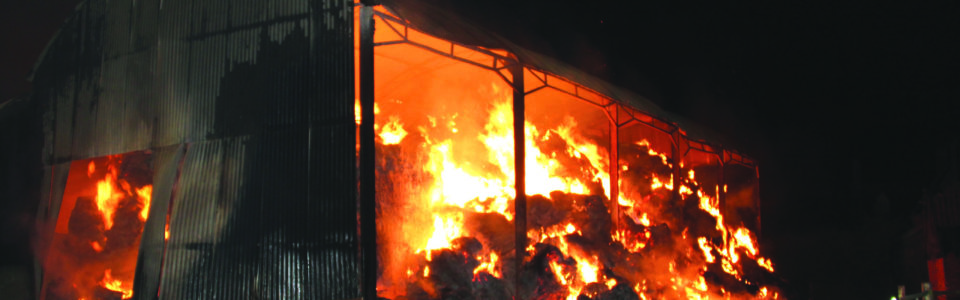
Electrical problems account for many fires in agricultural properties. Here are a few common issues that we find:
Batteries
An exploding battery can be catastrophic. Battery charging should always be carried out in well ventilated areas, away from naked flame or sparks.
Domestic appliances
It’s not uncommon to see old domestic appliances such as washing machines and driers used on the farm or in stable blocks. Always site such appliances in areas away from flammable materials (such as straw or hay), and don’t dry rugs, tack etc next to fires. All portable appliances should be subject to an annual portable appliance test by a qualified electrician.
Electrical sockets and wiring
Potential fire risks can include:
- Overloading sockets or extension reels so that they overheat and catch fire.
- Not fully unwinding extension reels before use, as coiled up leads become very hot and may catch fire.
- Old portable electrical appliances that have never been tested and may be unsafe.
- Electrical wiring that has been gnawed through by animals.
- Extending existing electrical systems, as this may cause overloading.
Always:
- Check the rating of tools/appliances to ensure that you are not overloading a socket or extension lead.
- Fully unwind extension leads before use or use shorter ones.
- Have your electrical systems and appliances periodically checked by a qualified electrician.
- Try to make wiring rodent proof by fixing under beams or ideally in conduit.
High voltage electricity lines
High voltage electricity lines are not insulated. High voltage lines (over 1,000 volts) can be easily identified – they are arranged horizontally, while low voltage (under 1,000 volts) will be vertical. For your safety, always avoid using ladders, hoses or anything else conductive near them.
Lighting and dust
Lights such as halogen bulbs can become hot in places where cobwebs and dust can build up. Very fine fuels, such as dust and cobwebs, will ignite easily and may dislodge other dust, which in turn catches fire. Be cautious with other lights and electrical items that are in direct contact with dust or other flammable materials, such as bales of hay or straw.
Always use bulkhead type lighting and ensure that fluorescent lights have covers on to protect from dust. Clean dust and cobwebs as part of your maintenance plan.
Untidiness
Untidiness in work areas where welding or grinding takes place could cause a spark to smoulder before becoming a major blaze. Keep work areas clean and have some form of firefighting measure in place in case of an accidental fire, such as a hose or fire extinguisher.