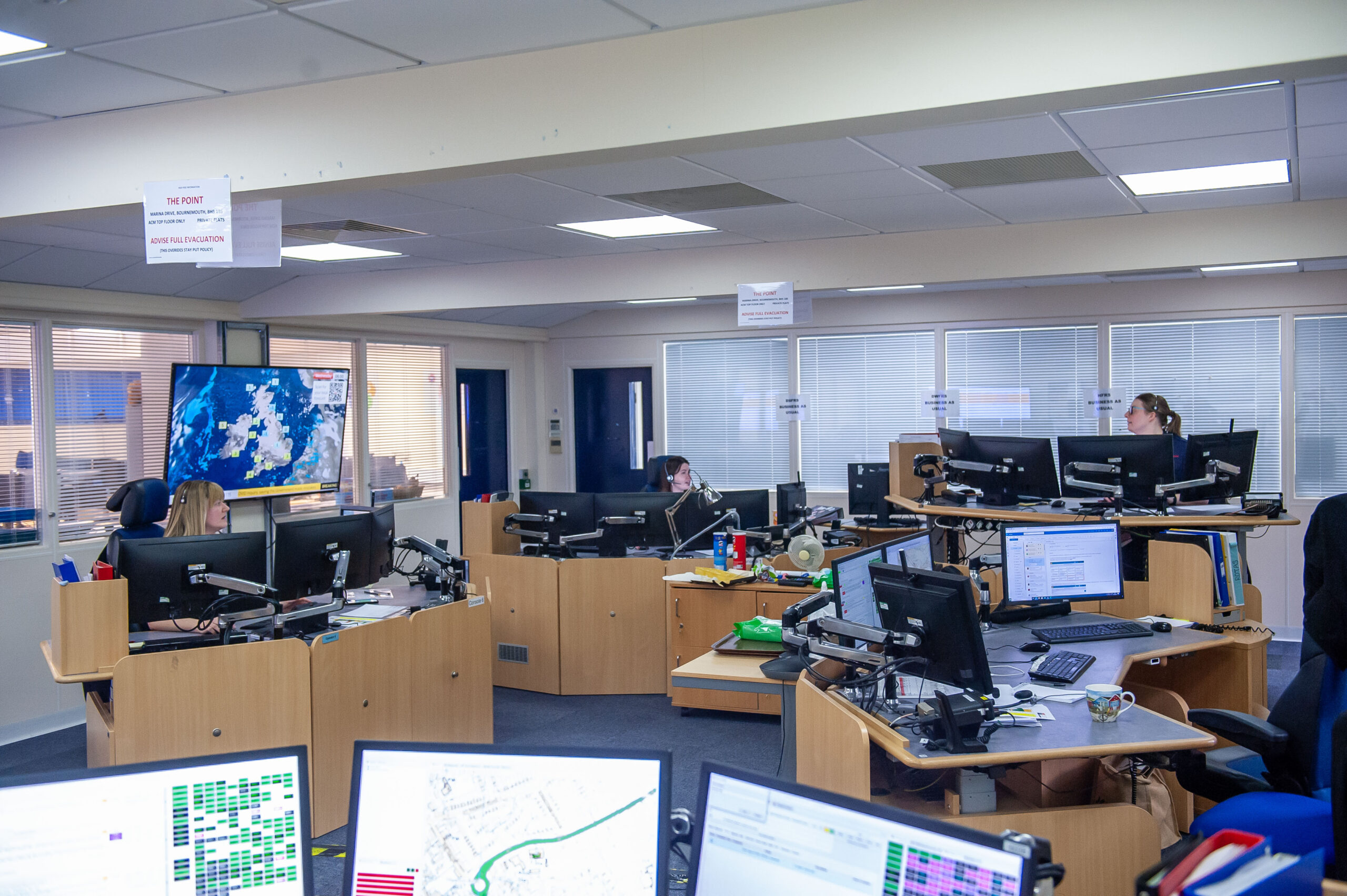

The primary function of a Firefighter (Control) is to act as a link between the public and operational firefighters at the 50 fire stations throughout the Service area, together with the various senior officers and sections within the organisation.
Firefighters (Control) will answer emergency calls, mobilise resources, align procedures, identify best practice and demonstrate operational efficiencies and effectiveness. They have direct contact with other emergency services and agencies, the use of a radio system and a computer-aided mobilisation system to the fire stations.
Dorset & Wiltshire works within a Network Fire Services Partnership (NFSP) with Devon & Somerset and Hampshire & Isle of Wight. Kent Fire & Rescue Service will be joining the partnership in 2027/28. This provides resilience to the other Services in the partnership and allows mobilisation of any resources within that partnership by any of the partner Controls.
Emergency situations mean that the person making the emergency call can be in a distressed state, which often means that the Firefighter (Control) must remain calm and show sympathy, tact and understanding to obtain the essential information that the Service needs. This includes being able to pass life-saving Fire Survival Guidance to callers that are unable to leave their property due to fire and/or smoke.
As we frequently deal with life and death situations, there is a need for constant monitoring and updating of systems and information. This falls within the remit of the Firefighter (Control) in the form of daily testing of communication equipment, identifying faults and informing appropriate officers and other agencies, and the constant updating of the various databases used within the Control room environment.
The Control team is split into four Watches (Red, Blue, Green, and White) and cover is required 24 hours a day, every day of the year, achieved by four Watches on a rotating shift pattern averaging 42 hours per week. This is covered by staff working two consecutive days (8am to 6pm), followed by two consecutive nights (6pm to 8am), and four days off. This includes weekends and bank holidays.
All Firefighters (Control) are trained to a very high standard and will be required to complete an intensive initial training course before joining a Watch.
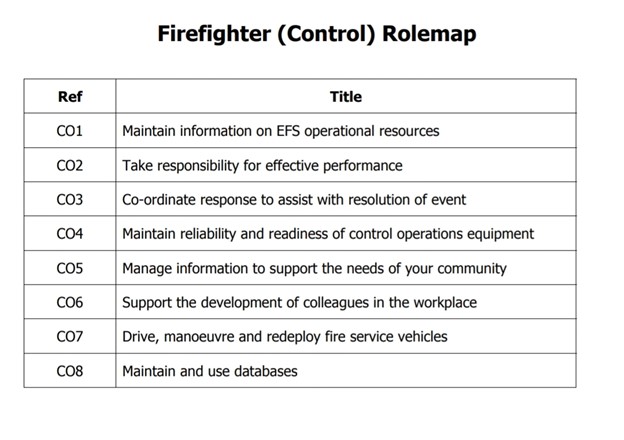
This role map outlines the varied responsibilities and duties expected of a Firefighter (Control).
What happens when a call comes in
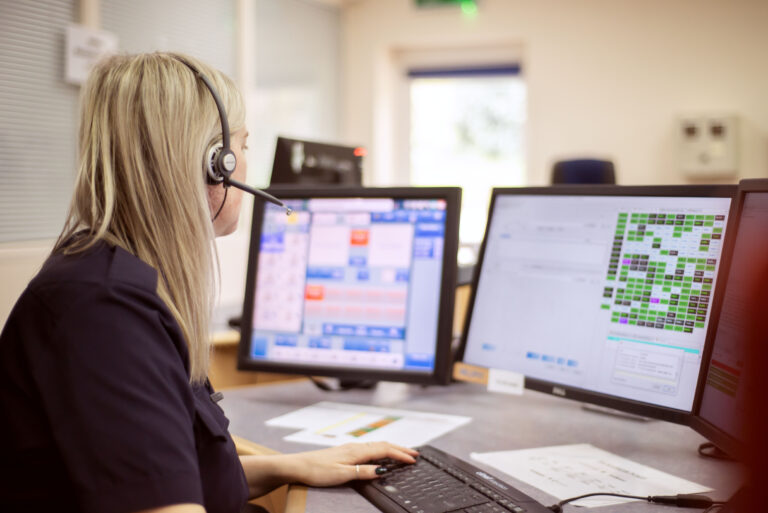
The instant a 999 call lights up the screen, the Control room springs into action. You answer within seconds, introduce yourself, and go straight to three essentials: Where is it? What is happening? Is anyone in danger?
While the caller explains, you capture the key details and confirm the location, using our tools to decide what help to send.
With a single dispatch, the nearest crews are on the road. You stay on the line, when necessary, offering calm, life-saving guidance, reassuring a family, talking someone through a safe escape, or simply keeping them focused until the sirens can be heard and the fire crews arrive.
As appliances mobilise, you track their progress, share updates across emergency services, and adjust resources if the incident grows or new risks emerge. From the first ring to the final “Stop” message, you are the steady heartbeat of the response, recording every step and keeping the wider community protected.
It is fast, intense, and deeply rewarding: one moment you are a voice of reassurance on someone’s worst day, the next you are orchestrating a response that saves lives and property.
Ready to make that difference? Fire Control could be the place for you.
You might also be interested in
-
Who we are