
In the first 24 months of your career as a firefighter, there is a lot to learn, so you will need to be motivated to self-study and write assignments, be prepared to attend extra training sessions, and undergo regular assessments to ensure that you are working in a safe manner. The firefighter role map will help you gauge what is required.
You can form part of the crew responding to incidents once you have completed and passed your two weeks of basic training, but you won’t be fully competent until you have completed and passed specific blocks of training.
A significant part of your on-going training is attendance at the mandatory weekly training night with the rest of the crew at your fire station.
Successful applicants will receive full and comprehensive training and be enrolled on an apprenticeship scheme (which is achieved through workplace experience). Please be aware that there is a requirement to gain key functional skills in Maths and English as part of the apprenticeship if this is not already evidenced through qualifications.
Use the following links to see more about the training requirements:
You will have been told which night of the week your station trains – you can also check by looking at the station information online.
These nights consist of an array of training, both practical and theoretical, for the whole crew, allowing you to develop your skills individually and as part of a team, and then maintain your operational competence throughout your career.
Initially your role will be fairly limited until you have undertaken basic training, but these nights are a good chance to get to know your colleagues, and learn how the Service operates.
You will be asked to attend one of our training centres – either West Moors or Devizes – to get you familiar with the equipment on the fire engine and ensure that you are safe and useful on the fireground.
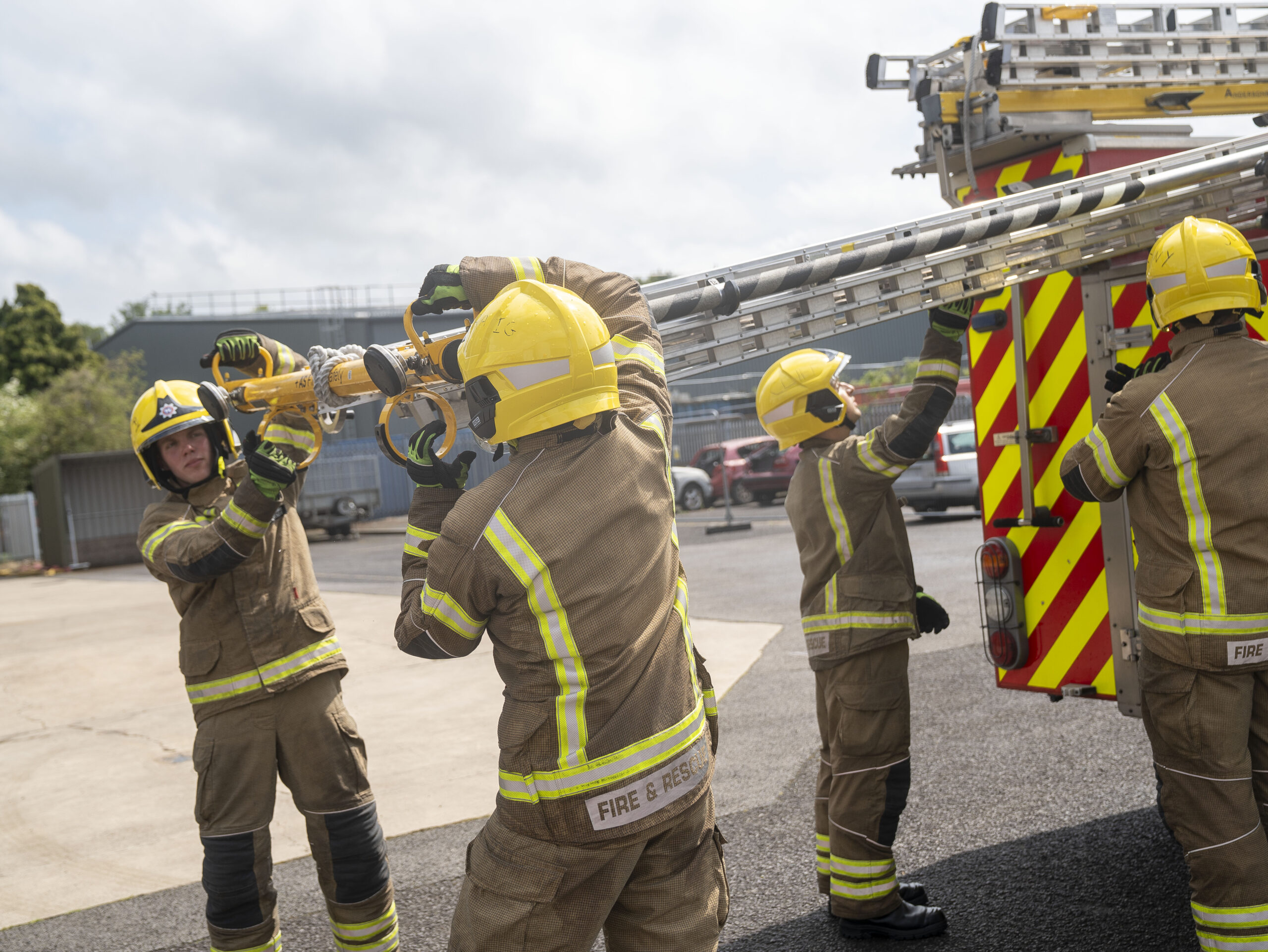
You will start your career with two weeks of basic training, when you will learn how to put up ladders as part of a team, as well as how to operate the pump and use a hydrant to get water quickly. You will also be introduced to Service procedures on different incident types.
On successful completion of the initial part of this course, you will be issued with your personal protective equipment and your alerter, which will let you know when you have a ‘shout’.
You will now be able to ride on the fire engine and attend emergencies, albeit it in a slightly limited role until you have completed further training.
After you have completed your basic training, you will be able to form part of the crew. However, you will need to pass a number of other courses before you are considered fully competent.
Depending on the experience you gain and the work you are able to put in, you should hope to complete this in around 24-36 months.
These additional courses are:
- Casualty care -three day course. Training in life-saving skills including basic life support for adults and children, use of semi-automated external defibrillator, oxygen administration in a pre-hospital environment, trauma care, catastrophic bleeding treatment and dealing with common medical conditions.
- Road traffic collision – five day course. Using specialist equipment to extricate casualties from vehicles, demonstrating casualty care skills to provide vital support to medical personnel and working alongside other agencies.
- Breathing Apparatus – ten days, Monday to Friday, two consecutive weeks. Gaining the knowledge and skills to respond as part of a highly trained team at incidents such as property fires, vehicle fires and hazardous materials. Although this can be demanding, both physically and mentally, it is a key skill.
- Live Fire – usually a one day course
Alongside this, you will be assigned a mentor, who will help to guide you through the Firefighter Development Programme. This is divided into the stages you need to complete and identifies the skills you must show at each point.
At the end of each stage is an assessment, where you must demonstrate your competencies.